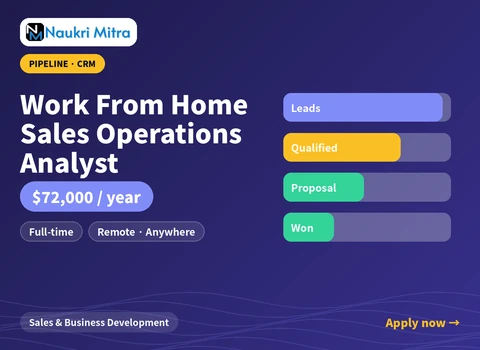
This is a full-time, remote Sales Operations Analyst position paying up to $72,000 a year, open to candidates anywhere. The team relies on this role to keep the sales organization's data and reporting in working order, which matters more than it might seem once you've seen what happens when nobody owns it.
Who this role is for
The baseline ask is a bachelor's degree, usually in business or a data-related field, plus 2 years of actual work in sales operations or reporting functions. That experience should include real-time spent inside a CRM system rather than just familiarity from a distance. Strong analytical instincts matter, along with comfort administering and cleaning up CRM data that other people have entered inconsistently.
Two years is enough to have seen at least one full sales cycle from the operations side, watched a forecast miss and had to explain why, and built reports that got used past their first week. It's not a long resume requirement, but it filters out candidates who've only ever touched a CRM as an end user rather than someone responsible for how it's set up.
This isn't a role built around closing deals or talking to customers directly. It sits behind the sales team, making sure the numbers they rely on are accurate and the systems they use don't quietly break. Someone coming out of a sales support or business analyst background usually adjusts to this faster than someone coming straight from a quota-carrying sales seat, mainly because the daily rhythm is closer to steady maintenance than chasing a number.
Day to day
- Keep CRM records clean and the workflows built around them running the way the sales team expects
- Put together the performance reports leadership and individual reps actually pull their numbers from
- Check the pipeline data behind each forecast so what gets presented upstream actually holds up
- Flag territory or account-assignment mismatches as the business changes shape
A typical week might involve rebuilding a report after a rep points out the numbers don't match what they're seeing on their own dashboard, then spending an afternoon reassigning a batch of accounts because two territories were quietly merged three months ago and nobody updated the CRM to reflect it. Other weeks are quieter, mostly routine maintenance and a scheduled report or two.
Because this role touches almost every part of the sales process without owning any single deal, you'll end up being the person who notices problems before the people closer to the customer do. That's usually a mismatch between what the forecast says and what the pipeline actually supports, or a rep who's been logging activity in a way that quietly skews the whole team's numbers.
Skills required
You'll need solid CRM administration skills, strong Excel ability, and a working understanding of sales analytics. Process improvement experience matters too, since much of this job involves noticing when a workflow is broken and fixing it rather than working around it every week. Reporting and forecasting support round out the core skill set. Comfort with pivot tables and basic formulas isn't optional here; most of the reporting work still runs through Excel even when a company also has a business intelligence tool layered on top.
On the nice-to-have side: familiarity with SQL for pulling data directly rather than waiting on someone else, experience with a visualization tool like Tableau or Power BI, and any exposure to sales compensation or commission structures, since those numbers often flow through the same reports you'll be building. Holding a Salesforce administrator certification helps but won't make or break an application. Prior experience with a sales engagement platform, such as Outreach or SalesLoft, also helps if the team happens to use one.
Pay and benefits
Base pay runs up to $72,000 annually. On top of that, you'd get medical coverage, a standard PTO allowance, and a company match on 401(k) contributions. Some companies filling similar roles also add stock options or profit-sharing to total compensation, and that's worth asking about directly during the interview, since it varies more than base benefits do.
Where this can lead
Sales operations analysts who spend a couple of years in a role like this one often move toward sales operations management, revenue operations, or a more specialized analytics seat with a heavier focus on forecasting models. None of that is guaranteed, and it depends a lot on how the company is structured, but the skill set transfers cleanly in that direction.
Working remotely
The job is fully remote with no location restriction, so it suits someone who's disciplined about staying on top of recurring reports without a manager physically checking in. Most of the collaboration happens asynchronously through shared dashboards and CRM notes rather than constant meetings, though there will be a standing sync with the sales leadership team to walk through numbers before they go out more broadly. Response time on ad hoc requests matters more than presence in any particular hour of the day.
Sales operations analyst jobs worldwide have become easier to do remotely simply because the CRM and reporting tools this role depends on already live in the cloud. There's rarely a reason this work needs to happen in an office, and companies hiring through Naukri Mitra for operations roles have mostly caught up to that, with the standing leadership sync scheduled around whoever's hired rather than the other way around.
How to apply
Send your resume along with a short example of a report or process you've improved in a previous role; even a rough before-and-after description is fine. Shortlisted candidates will be asked to walk through a sample CRM data set during the interview, mainly to see how you think about cleaning it up and what you'd flag first. There's a second, shorter conversation with the sales operations lead after that, focused mostly on how you've handled competing requests when two departments want the same report formatted two different ways. Interviews typically wrap within two weeks of the initial screen.