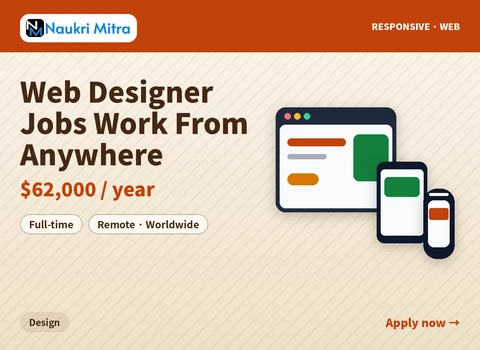
This is a full-time, remote Web Designer position open to applicants anywhere, paying $62,000 a year. The work centers on building websites that hold up well on any device and updating them as feedback or performance data comes in.
Responsibilities
- Turning a design concept into a live, responsive site that works on a phone screen as well as a desktop monitor
- Working alongside developers, and often the client directly, to settle how a layout should behave and what functionality a page actually needs
- Going back into a live site to adjust it once feedback comes in or performance data shows where visitors are dropping off
A typical project might start with a client wanting a redesigned landing page for a product launch. You'd sketch the layout, build it out in a platform like Webflow or WordPress, then check it across a few screen sizes before it goes live. A few weeks later, the client might notice visitors are abandoning the page at the pricing section, and you'd go back in to figure out why and adjust the layout accordingly.
Some weeks lean almost entirely toward new builds, especially when a client is launching something, and everything is on a deadline. Other weeks are quieter, spent making small adjustments across a handful of existing sites based on whatever feedback or data has come in since the last update. Both kinds of weeks are part of the role's normal rhythm.
What You'll Need
A bachelor's degree is required, usually in web design or a closely related field. Eighteen months of hands-on experience is expected, along with a portfolio that showcases responsive design work rather than pages that only look right at a single screen width.
Working knowledge of HTML and CSS matters here, even for roles built mostly inside a platform like Webflow or WordPress, since there's almost always a point where the built-in tools run out and a bit of custom code fills the gap. Comfort with Adobe Creative Suite for mockups and graphics is expected, too, and a working grasp of UX fundamentals helps when a layout needs to serve both a visitor's needs and a client's business goals.
None of this needs to be expert-level coding. Most of the day-to-day design happens through a visual builder, and the HTML/CSS knowledge mostly gets used for small fixes: adjusting spacing that a template won't quite let you control, fixing how an element behaves at an odd screen width, or cleaning up code a previous designer left behind on an older site.
Nice to Have
Experience with basic SEO practices, since a site's structure and load speed affect how it performs in search. Prior work with analytics tools is a plus, since interpreting visitor data is part of what drives the update work described above.
Benefits
- Health coverage
- Paid time off
- Remote-work flexibility
Some employers hiring for this kind of role also include a wellness stipend or a home office equipment allowance, particularly for staff working fully remotely. Naukri Mitra sees that second benefit show up often enough in web design postings that it's worth checking the specific listing for it, since it isn't universal across every employer.
Remote Work Details
The role has no fixed location, so most collaboration happens over shared files, project boards, and scheduled calls rather than in an office. A client review might happen over a screen share, where you walk through a staging link together, and then you'd make the requested changes on your own time before the next check-in.
A stable internet connection and a setup capable of running design software and a browser with several tabs open at once are the basic requirements. Beyond that, most of the job is self-directed: managing your own time across a few active projects rather than waiting for direction on a single one.
Since there's no set office hours built into the role, most teams rely on a shared calendar and clear deadlines rather than tracking when someone is logged on. That works well for designers who are comfortable structuring their own day, and less well for anyone who needs a fixed schedule to stay on track.
Pay and Growth
The role pays $62,000 annually. Eighteen months of experience places this in an early-career tier, past a total beginner but not yet senior, and it's a reasonable spot for someone who's built a couple of solid projects and wants a full-time role to build a deeper portfolio from.
Growth from here tends to move in one of two directions. Some web designers deepen the technical side, learning enough front-end development to take on more complex builds without waiting on a developer for every change. Others move toward strategy and layout decisions on larger sites, working across a whole site's structure rather than one page at a time. Either path is realistic within a couple of years for someone doing consistently solid work here.
Remote web designer roles at this pay level and experience tier tend to sit around the middle of the market once benefits like a home-office allowance are factored in alongside the base salary, rather than looking at the number alone.
Designers coming from an agency background tend to settle in quickly, since juggling several client sites at once is already familiar to them. Someone moving from an in-house role at a single company, where there was usually just one site to maintain, should expect more context-switching between projects than they're used to.
How to Apply
The application needs a resume and a portfolio link, with at least a couple of projects shown across multiple screen sizes so reviewers can see how the design actually adapts. Static screenshots of a desktop layout alone make it hard to judge the responsive work this role depends on.
Expect the process to include a portfolio review and a brief conversation about how you've handled a site update using real performance data, not just aesthetic feedback. Most candidates hear back within one to two weeks of applying.